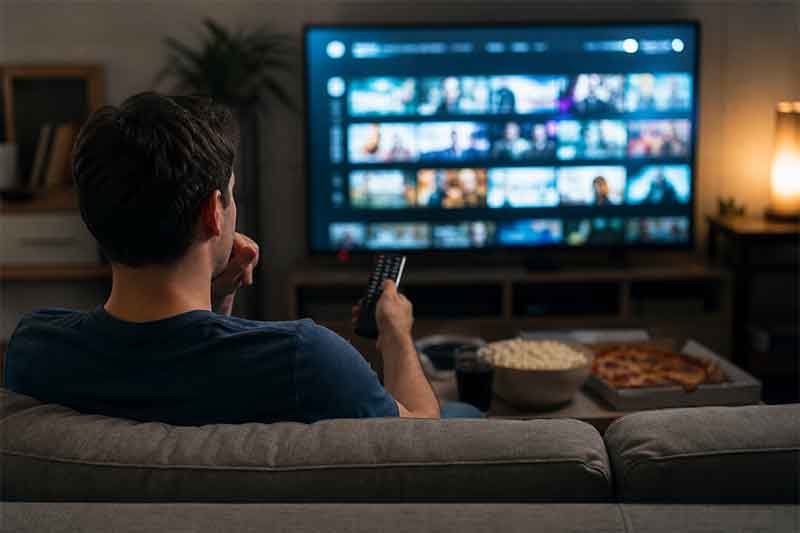

Watching TV all day every day can slowly affect your body, mind, and daily habits in ways you might not notice at first. The most immediate impact is reduced physical activity, which can lead to weight gain, low energy, and poor overall health. Over time, it can also influence your sleep, focus, and even how you interact with other people.
Physical Health Starts to Decline
The biggest issue with what happens if you watch TV all day every day is lack of movement. Sitting for hours means your body burns fewer calories. This can lead to weight gain and increase the risk of conditions like heart disease and poor posture.
Your eyes also take a hit. Long screen exposure can cause eye strain, dryness, and headaches. You may not feel it right away, but after weeks or months, the discomfort becomes noticeable.
Your Brain Gets Less Active
Another important effect is reduced mental stimulation. Watching TV is mostly passive. Your brain isn’t challenged the same way it is when reading, working, or solving problems. Over time, this can affect memory, focus, and creativity.
People who spend too much time watching TV often find it harder to concentrate on tasks that require effort. It becomes easier to stay in a passive state rather than actively thinking or creating.
Sleep Quality Gets Worse
One overlooked effect of what happens if you watch TV all day every day is poor sleep. Especially if you watch late at night, the blue light from screens can interfere with your body’s natural sleep cycle.
This can lead to difficulty falling asleep or feeling tired even after a full night in bed. Over time, poor sleep affects mood, energy, and productivity.
Mental Health Can Be Affected
Too much TV can also impact your emotional well-being. Spending long hours alone in front of a screen may increase feelings of isolation or boredom. If the content you watch is negative or stressful, it can affect your mood without you realizing it.
On the flip side, TV can be relaxing in moderation. The problem starts when it replaces real-life interactions and activities.
Daily Productivity Drops
When TV takes up most of your day, other important activities get pushed aside. Work, hobbies, exercise, and social time all decrease. This can lead to a cycle where you feel unproductive, which then makes you more likely to keep watching TV.
This is a key part of what happens if you watch TV all day every day—it slowly reshapes your routine without you noticing.
Social Life Becomes Limited
Spending too much time watching TV can reduce face-to-face interaction. Over time, this may affect communication skills and relationships. Humans naturally need social connection, and replacing that with screen time isn’t a healthy long-term choice.
Even simple conversations or shared activities become less frequent when TV becomes the main focus of your day.
Is Watching TV Always Bad?
Not necessarily. Watching TV in moderation can be entertaining, educational, and relaxing. The problem isn’t TV itself, but how much time you spend on it.
If you’re wondering what happens if you watch TV all day every day, the answer is balance. A few hours a day is fine, but filling your entire day with it can lead to negative effects over time.
Simple Ways to Fix the Habit
You don’t need to quit TV completely. Start by limiting screen time and adding small activities like walking, reading, or talking with friends. Even short breaks can make a big difference.
Try setting a schedule. Watch your favorite shows, then turn it off and do something else. This helps your brain and body stay active.
Final Thoughts
So, what happens if you watch TV all day every day? You may experience physical health issues, reduced focus, poor sleep, and less social interaction. These changes don’t happen overnight, but they build up over time.
The key is moderation. TV can be part of your day, just not the whole day. Keeping a healthy balance will help you feel better, think clearer, and stay more productive.
Reference: whatifcorner.com
Related Posts: